Internet Retailer - Strategies For Multi-Channel Retailing

News Stories
News Stories Tuesday, May 15, 2007   
E-Mail this article to a friend  Print a printer friendly version of this article   

Amazon sweetens its offer for food shoppers

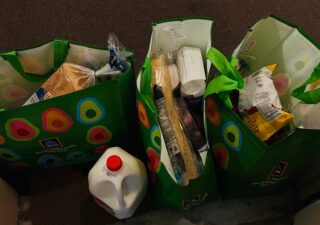
Taking advantage of one of the prime differentiators between online selling and offline selling, Amazon.com Inc. is rolling out a subscription service for its grocery customers that enables them to sign up for regular replenishment of nonperishable items. To entice them to get automated delivery, Amazon is offering 15% discounts and free shipping for customers who sign up for its Subscribe & Save service.

Customers can receive automatic delivery of items on their shopping list every month, or every two, three or six months. There is no minimum purchase or time commitment, and the customer is charged only when the items ship. Amazon.com, No. 1 in the Internet Retailer Top 500 Guide, will send subscribers automatic e-mail reminders, allowing them to add items before their order ships or to cancel an order.

“Subscribe & Save is an incredibly easy and convenient way to get products you use every day delivered to your house for free, automatically, and at a good price,” Maria Renz, vice president of consumables at Amazon.com, tells Internet Retailer.

Amazon launched its grocery store last July with 14,000 items, and has increased that selection to 22,000 non-perishable items. Renz says a typical supermarket might have between 30,000 and 55,000 items, including health and beauty aids and perishable items like milk and meat. While Amazon does not break out results for the grocery site, Renz says the increase in selection and the introduction of Subscribe & Save are signs that the company is pleased with customer response to date.

The Amazon Grocery site emphasizes that it offers a wide variety of products, including all flavors of many brands, hard-to-find regional specialties, including Panda raspberry bars from Norway and Zatarain’s jambalaya mix, as well as an assortment of natural and organic products. Renz says the company’s research found that “time-pressed moms and dads” are shopping at many stores and need a single place where they can find everything they want.

“Our customers may go to a neighborhood grocery store a couple of times a week for fill-in items, they may go to a club store once a month for bulk purchases, they may also go to a health store, or a Trader Joe’s or Whole Foods a couple of times a month,” Renz says. “For us, offering a wide selection of products is something we can do very well online because we don’t have the restricted shelf space of a bricks-and-mortar store.”

That argument makes sense to Jon Hauptman of retail consulting firm Willard Bishop, who says the economics of retailing online should make it possible for Amazon to sell items that most supermarkets could not afford to stock..

“The cost of shelf space is so high at any bricks-and-mortar supermarket that any product on the shelf has to sell quite a lot and quickly to maintain its space,” Hauptman says. “In an online model like Amazon’s, they don’t have the cost of grocery shelf space and can sell more slower-moving specialty items.”

Amazon appears to be the first of the online grocers to offer automatic replenishment, although services like Peapod, FreshDirect and SimonDelivers all allow customers to set up shopping lists for easy reordering. A Peapod spokesperson notes that a next-day service like Peapod, which delivers perishable as well as non-perishable items and is designed to replace the trip to the supermarket, is very different from a service like Amazon’s that is geared to occasional bulk orders of packaged goods.

Back...

Copyright © 2009 This content is the property of Vertical Web Media. Privacy Policy
Articles by Age, Title, Author. Conference, CD, Guides, Popular Searches