112 retailers have 153 m-commerce sites and apps. Monthly traffic to the top sites is in the millions. And consumers are buying. While hurdles remain before m-commerce can be called mainstream, pioneering retailers are stockpiling valuable lessons.
By Bill Siwicki

Ready or not, retailers have to create a mobile commerce strategy. In the past 18 months, m-commerce has jumped from experiment to reality. Here are the facts:
- On any given day, 57.8 million American consumers access the web via mobile devices, according to the Pew Research Center.
- There are 112 retailers, 58 in the Internet Retailer Top 500, with 153 m-commerce sites and/or apps.
- North American mobile commerce sales will top $750 million this year, according to new data from emerging technologies consulting firm ABI Research.
- Retailers in mobile commerce report consumers are not just browsing or comparing prices, they’re buying—and sales are growing. EBay, for example, reported a whopping $380 million in sales through its iPhone app and m-commerce site for the first nine months of 2009.
- EBay’s mobile site and app combined received 5.4 million unique monthly visitors in August, according to The Nielsen Co. Amazon.com received nearly 3.5 million, Gamespot about 2.5 million, Fandango nearly 2.4 million and Netflix just over 2.2 million.
- Up and down the line, vendors that specialize in mobile commerce technology report business is booming.
- And the biggest e-commerce technology vendors are falling all over each other introducing m-commerce technology: Escalate Retail in April, Demandware Inc. and ATG in September, MarketLive Inc. in October, Fry Inc. and Venda Inc. in early 2010—and more to come.
“The industry is seeing m-commerce maturing right now,” says Kevin Ranford, director of web marketing at 1-800-Flowers.com Inc., which runs a mobile site and app and employs text message marketing.“From the response we’ve gotten to the types of things people are buying to the feedback we’ve received from customers, we’re there,” says Sam Hall, director of Amazon Mobile at Amazon.com Inc., which operates a mobile site and app and text message marketing and selling.
“There’s no question m-commerce has arrived,” says Steve Yankovich, vice president of platform business solutions and mobile at eBay Inc. “If you are a retailer today and you’re not offering the customer the ability to participate in commerce whenever and wherever they want and another retailer does, you’re going to have a problem.”
To be sure, it’s still early days for mobile commerce, and most retailers are not revealing revenue figures, a sign that sales directly through the phone remain relatively modest. But the retailers that have jumped into m-commerce are learning valuable lessons about the best designs for mobile phones, how to market to consumers through mobile devices, and the special opportunity to tie the mobile phone—which most consumers carry with them always—with in-store shopping.
Growing up
It’s now clear that the turning point for mobile retailing came with the introduction two years ago of Apple Inc.’s iPhone, the first mass market mobile device that made the Internet fun and easy to use, especially on sites optimized for mobile phones. Other manufacturers more recently introduced their own smartphones, with PC-like functionality. And the use of the web from mobile devices exploded.

Already, 32% of Americans, 97.3 million of 304 million, have used a conventional mobile phone or smartphone to access the Internet, according to the Pew Research Center’s Internet & American Life Project. This is up from 24% when the survey was last conducted in 2007. On a typical day, 19% of Americans, or 57.8 million individuals, use the Internet on a mobile phone, up from 11% two years ago.
However, that growing use of the web on the go doesn’t necessarily mean it’s ready to become a retail channel, some say.
“Mobile commerce is still in its infancy,” contends Jeffrey Grau, senior analyst at research firm eMarketer. “Web-enabled mobile phone users are much more likely to employ their devices to get weather forecasts, read news, find movie times and bank online than buy products.”
And perhaps mobile commerce is not for every retailer, adds Nikki Baird, a managing partner at Retail Systems Research LLC who follows m-commerce.
“Retailers have to look at their customers and mobile traffic to their e-commerce site,” Baird says. “If you have young customers with thumbs glued to phones 24/7, then mobile is a good bet. If you have baby boomer or retiree customers with moderate or fixed incomes, then it’s probably not a big priority.”
But increasingly, analysts are urging retailers to develop a mobile strategy.
Retailers must decide when—not if—they will launch m-commerce sites or apps, says m-commerce analyst Ian Fogg in a Forrester Research Inc. report titled “Why Mobile’s Time Has Come.” “Failure to pick the right approach now will lead to others seizing control of the new landscape that extends to every minute of consumers’ lives, 24/7,” he states.
Join the club
Whether they are moving out of fear of falling behind competitors or because they see a big opportunity, more and more retailers have been unveiling mobile initiatives. And size does not matter.
Small retailers like BikeSomeWhere.com and SonicElectronix are in the game. Mid-size merchants like Karmaloop and Moosejaw Mountaineering have established mobile sites. And heavy hitters such as Amazon, Sears, QVC, Foot Locker and Newegg are leading the way. (Click here for chart of The Mobile Commerce Universe.)
“M-commerce is likely to follow the history of exponential growth previously experienced by the e-commerce surge,” says Adam Boysen, project manager at e-commerce and m-commerce research and consulting firm Acquity Group. “Given the significant amount of growth in the mobile channel we’ve already seen this year, I believe the tipping point for online retailers to start developing a mobile strategy has already passed. The online retailers that have already invested in the mobile channel are poised to benefit the most from marketing their mobile presence to early adopters, and the exponential revenue growth rates that will soon follow.”
While 102 retailers have built special web sites designed for conventional mobile phones and/or smartphones, many of these same merchants have also gone the route of building dedicated applications—or apps—for specific phones, mostly for the iPhone. Some merchants have gone the app route without building a mobile-optimized site.
Apps typically are faster and often can do more because the software, much of the design and some of the content reside on the phone itself, minimizing calls to the retailer’s web server for information that changes.
Recognizing the growing demand for mobile sites and apps, vendors have stepped forward with technology that lets retailers join the mobile game. So far, m-commerce is something rarely done in-house, and the cost of entering m-commerce via a vendor’s technology is relatively small.
$20 to $200,000
Retailers, for example, can pay mPoria Inc. as little as $20 a month for a basic, software-as-a-service site with a limited number of products. Far richer, more robust sites from vendors including CardinalCommerce Corp., Digby, Unbound Commerce and Usablenet Inc. can run from $20,000 to $200,000.
“The question today is, if you’re an e-retailer, why wouldn’t you do this?” says Mark Beccue, senior analyst, consumer mobility, at ABI Research. “The cost of creating a mobile site is so minimal. Even more minimal when you compare that cost to the benefits—incremental sales, increased market share and being top of mind among consumers.”
Besides making it relatively inexpensive to get started, vendors can help overcome technical hurdles, such as designing mobile sites and apps that work on many phones, each of which may render a display differently. About nine out of 10 retailers in mobile use vendors, and those vendors manage enormous databases of device types that do the work for the retailers. Or, the retailers, with or without a vendor, build sites for a handful of device types, or sites so basic they can easily be rendered on any device.
Whether handled through a vendor or in-house, responsibility for m-commerce typically resides within some combination of the e-commerce, marketing, merchandising and I.T. departments. Staff members in each of these departments must learn some new skills, primarily, understanding what a mobile shopper is trying to accomplish and how he’s trying to accomplish it compared with a web shopper. Marketing staff, for example, may realize efforts need to focus on the speed with which a customer can buy or on a specific product category as opposed to special promotions.
Basic skills needed for mobile commerce are roughly similar to those required in e-commerce, Ranford explains. But there are whole new sets of skills required, such as ones for developing text message marketing and mobile apps, that I.T. and other departments must research in-house or in conjunction with vendors, he adds.
Early learning
Retailers are learning fast what works when it comes to selling through the mobile phone. Lessons learned include ones in site and app design, marketing protocol, and how to tie the mobile phone into store and web sales.
When SkyMall Inc. began developing its iPhone app this summer, it looked to other m-commerce apps, taking note of what seemed to work and, what it found to be most important, designs it felt did not.
As a result, the SkyMall mobile app, launched in September, opens to Featured Products, where shoppers can slide from left to right and back—without changing pages—to view five products the retailer chooses to highlight. A box below enables shopping by department, and buttons below that enable search and access to a gift finder and the shopping cart.
“From a merchandising perspective, we felt it was important to open with big presentations of select featured products. And it differentiates us from other shopping apps,” says Jay Scannell, vice president of information technology at SkyMall. “If you open up other shopping apps, you are finding out what to do and what you can do as you go along. We wanted to make sure that right away people got it that this is about products and shopping and completing your order.”
Early response to the app and its design is encouraging, Scannell says.
“Customers are engaged like we hoped, very quickly getting into the shopping process,” he says. “It’s fairly clear it’s because we give them the products and easy navigation up front instead of starting with a promo page or marketing message. And since we released our third quarter and holiday catalog app updates with fresh new content, customers have been opting to make the updates. To see customers take a moment and elect to download these updates shows they are engaged and is really encouraging.”
1-800-Flowers.com also has learned a lot about mobile merchandising. It found over time that the fewer products it offered on mobile, the higher the conversion. Fewer items on offer meant fewer mobile consumers getting lost or frustrated amidst an overwhelming product assortment on a small screen.
“It’s a learning that continues to prove itself out,” says Ranford of 1-800-Flowers.com. “We’ve really rallied around top products from what we see on overall web sales reports. We trim down the selection to what is the most digestible amount of products so the mobile shopper doesn’t have to scroll through more products than they necessarily need. This is a unique channel and requires different thinking in merchandising. Whenever we expand a product category online, we have to constantly be trimming it down for mobile.”
Mobile as marketing
While 1-800-Flowers.com and SkyMall have learned about design and merchandising, Moosejaw Mountaineering, one of the earliest pioneers of m-commerce, has learned through experience that mobile can be an effective marketing tool.
One of the retailer’s two mobile sites, m.Moosejaw.com, enables shoppers to access the entire catalog and showcases on the home page the latest products, special mobile promotions, buttons for signing up for text messages and e-mails, and a link to Moosejaw Madness, an entertainment area featuring intentionally inane humor. For example, one game lets shoppers throw lunchmeat at a butcher shop window.
“We’re translating our brand into a compelling mobile experience we use to deepen our interaction with the Moosejaw community,” says Harvey Kanter, president and CEO.
And the Moosejaw community has spoken. Through a significant amount of customer feedback via e-mail and Twitter, says Gary Wohlfeill, executive vice president of marketing, Moosejaw has learned that customers are quite happy the merchant is available anytime and anywhere. And it has learned that mobile is fostering even stronger connections with customers.
“They’ve made it clear they love interacting with the brand on their phones,” Wohlfeill says. “We see a lot of entries for our monthly contest coming in from mobile, and customers have been very positive about being able to see the pictures in our Flickr pool on our mobile site.” A Flickr pool is a collection of photographs.
Customers have also reacted very positively to Moosejaw’s text message programs. The retailer has been pleasantly surprised at how the programs, one for marketing and one for order tracking, have grown.
The opt-in text message list for its Moosejaw Madness marketing program has topped 3,000. The retailer routinely asks customers for silly responses oriented around the brand, and it has achieved response rates as high as 54%. As for order tracking, 25% of Moosejaw’s entire customer base use the text message program.
“The Madness texts generate great word of mouth because they’re so different from anything customers have seen before in retailing. The word of mouth and the intimate and immediate brand interaction have increased brand loyalty, as we’ve seen in responses by text and through feedback,” Wohlfeill explains. “And the order tracking shows that Moosejaw will provide customer service wherever and whenever the customer wants. This is yet another mobile interaction that generates brand loyalty.”
And simply having a rich and well-designed mobile presence is effective marketing in and of itself, merchants in m-commerce say. Retailers just have to make sure they get the word out.
“We have four million users in our e-mail database and our web site has anywhere from 12 to 20 million unique monthly visitors. This is a lot of people we can get to become familiar with mobile,” says Ted Hong, chief marketing officer at online ticketseller Fandango, which operates an m-commerce site, mobile app and text messaging program.
Fandango promotes the m-commerce site and app on the home page and other locations on the e-commerce site to those millions of monthly visitors, and it has sent out e-mail marketing pieces that focus exclusively on encouraging customers to adopt Fandango mobile.
“Ultimately it’s great word of mouth,” he adds. “The fact that app users like it and use it, that is the best thing a company can do. If it’s a well done app, you can generate a lot of buzz and awareness. What we’ve done is make it very easy and convenient for consumers to do something they need to do. That’s the key."
A multichannel tool
Using the mobile channel as part of a multichannel strategy is another area where mobile pioneers have learned valuable lessons.
77% of retail chains see high value in mobile commerce as a way to connect the online world with physical stores, according to a new study from Retail Systems Research. “Store-based retailers view mobile as an opportunity to connect their various channels,” Baird says.
Such is the case with beauty products retailer Sephora USA Inc. It launched a mobile site specifically tailored to serve as a multichannel tool. The mobile site, built using the MobileVoice system from customer ratings and reviews technology vendor Bazaarvoice Inc., puts thousands of reviews on bath and body, hair, makeup, and fragrance products from Sephora’s e-commerce site into the palm of a store shopper’s hand.
“We want to deliver the best client experience to our shoppers, wherever they shop,” says Julie Bornstein, senior vice president of Sephora Direct. “MobileVoice allows us to amplify the voice of our clients by making reviews easily accessible through mobile devices. In-store shoppers can simply read the reviews written on any product, or use top-rated products as a guide, to select the right lipstick or blush.”
“We’ve found that the mobile site is driving sales in stores,” Bornstein says. “It’s keeping some customers in stores longer by giving them all this information at their fingertips.”
While sales driven by the mobile site are still small, they are growing, she adds. In fact, Sephora has concluded that mobile commerce will become more valuable; so much so that the retailer next year will be introducing new mobile technology, which it is keeping under wraps for now.
Consumers are buying
Ultimately m-commerce comes down to selling goods, whether directly through an m-commerce site, app or text message (Amazon.com and QVC enable purchases through text messaging), or through lending a hand to in-store sales. When it comes to sales within the mobile channel, some of the pioneers report mobile to be healthy all on its own.
EBay was the first merchant to break out mobile sales figures, with its announcement of $380 million for the first nine months of the year. “The frequency with which customers are using mobile is very high,” Yankovich says. “The multiple interactions in a month is very high.”
And eBay customers are buying the full range of merchandise through their mobile phones. “It’s all over the map, and generally maps to popular things on the site,” he adds. “And our deals of the day are working very well on mobile: phenomenal deals on new, in-the-box, fixed-price products that are really generating sales.”
Fandango executives say they’re very happy with how m-commerce is performing. Sales through the mobile site and app combined this year have surpassed those through its 800-number channel; and since the introduction of its app in March, mobile sales have more than doubled.
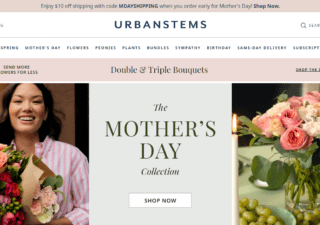
The mobile channel also is serving 1-800-Flowers.com well. For example, the retailer included banners and copy for its mobile site and apps in e-mail marketing before Mother’s Day this year. It sent out special text messages with 20%-off coupon codes to its opt-in text list members. It included mentions of mobile in newspaper and television ads and in its catalog.
It also ran a banner ad on its home page that directed shoppers to Apple’s App Store where shoppers could download its app. And it even plunged into the uncharted waters of mobile app advertising—placing ads for its mobile app within the apps of others. In these ads were coupon codes for 20% off Mother’s Day orders.
“We wanted to make sure everyone was aware of our mobile opportunities,” Ranford says. “Mother’s Day gave us an opportunity to really get mobile out in front of people. And we used existing internal channels like print advertising and e-mail marketing with large budgets to help mobile. In the end we got a 42% join rate to our text message promotions list, 173% mobile sales increase year over year for the Mother’s Day period, and a 46% increase in app downloads week over week.”
For 2009 to date, 1-800-Flowers.com is reporting a 200% year-over-year increase in m-commerce sales. “Everything is really coming together. It’s a revenue driver for us,” Ranford says. “It was an emerging channel two years ago and now it has emerged.”
bill@verticalwebmedia.com