Internet Retailer - Strategies For Multi-Channel Retailing

Feature Article
Feature Article December 2007   
E-Mail this article to a friend  Print a printer friendly version of this article   

Mass Merchants/Department Stores
Helping shoppers through a massive selection


Mass Merchants/
Department Stores
Amazon.com
Buy.com
Costco.com
JCPenney.com
Macys.com
NetShops.com
Overstock.com
Shop.com
ShopNBC.com
Walmart.com

Mass merchants live up to their name: They are massive. The mass merchant and department store e-retailers named to the Hot 100 have been very busy trying to ease the shopping process and give customers helpful information to aid them in finding and choosing what they need from vast assortments of products.

Customer reviews are becoming an indispensable tool to give shoppers a helping hand. Walmart.com, for example, added customer reviews in July. The web retailer's customers have generated more than 80,000 reviews since the summer; today customers are adding about 1,000 reviews daily. The result: Reviews of highly rated products have helped lift conversion.

Amazon.com this year added an extraordinary feature to its longstanding customer reviews: online video. Customers now can upload videos with their reviews, making the critiques among the most robust in the industry. ShopNBC.com also is working with online video: More than 30% of items now have video product demonstrations.

To help customers wade through an enormous selection, Costco.com this year enhanced the front end of its e-commerce platform to add more options and easier navigation, a move common among e-retailers in this category.

Overstock.com used web analytics, for instance, to find the best way to attract shoppers and boost sales, consequently modifying page design. The modifications produced an increase in products added to shopping carts. Moving product information higher on pages lifted the number of products added to carts by 5%. And Macys.com enhanced a product comparison feature that enables shoppers to weigh items based on a wide range of product attributes, a move that improved conversion.

NetShops.com altered its home page this year with the intent to make it easier for shoppers to drill down through a huge assortment of stores and items. It also introduced technology that makes it stand out in the crowd: Shop Together. This feature enables two shoppers to initiate a session on the site that allows them to view the same products at the same time, just as they would if they were walking together down aisles in a store.


Still the one
If it's impossible to attempt any roundup of the web's best retailers without featuring Amazon.com--and it is--it's no surprise: Seattle-based Amazon.com defined the genre, and it ranks highest in online sales. But sales rank isn't why Amazon.com is a leader--sales rank is a by-product of the innovation and the operational excellence that sets it apart, as this year again shows.

The features, functionality, products and marketing programs that bring customers in and bond them to the site keep rolling out. This year, a few of those additions included video product reviews, which let customers upload their own video to share their opinions about a product; and High-Def 101, an on-site center that corrals the e-retailer's high-definition home entertainment products along with educational content to help with purchase decisions.

Amazon.com has added Amazon Prime, which gives customers free two-day shipping on all purchases for $79 a year. It has moved into new categories, such as the downloadable digital music store launched on Amazon.com, and the destination site for shoes, Endless.com. And it has strengthened its existing presence in other categories; for instance, testing an expansion into perishable groceries in the Seattle market.

Throughout Amazon.com's recent build-outs runs a strategic common thread: they've been more about deepening the relationship with customers than about adding the latest rich Internet applications to wow them. That counters the current trend toward such technology at many e-retailers, notes Gene Alvarez, vice president of retail e-commerce at research and consulting firm Gartner Inc.

"Amazon's using an interaction-based CRM approach to strengthening its bond with customers. It's using its product recommendations and watching your buying history as well as expanding the products it offers as a way to build that strong relationship and get you to come back--even though it may not have the flashy rich Internet application look and feel. It has not adopted Web 2.0 yet as have some others, but with its deep fan base, it can get away with it." Back to Top


Buy it wherever
Buy.com, a general merchandise, online-only retailer, has built a reputation for being on the leading edge in areas such as social networking and Internet TV.

In August, for example, Buy.com launched a new application--Garage Sale--on Facebook.com using e-commerce technology Buy.com acquired earlier this year. The application lets Facebook members post and sell items directly on their profile pages. The service charges a flat 5% commission for items sold, with buyers using a credit card to pay for items and sellers receiving the funds through Pay Pal or a check cut by Buy.com.

Buy.com sees the growth opportunity with Garage Sale in the fact that the application enables users to transition their social networking personal pages, which already garner high traffic, beyond information-sharing. "The purpose of Garage Sale is to offer consumers a means of conveniently posting and selling items on their profile pages," Buy.com CEO Neel Grover said when the new application launched. "This is a completely untapped area in e-commerce. The opportunities are virtually endless."

Garage Sale is not the first time Buy.com has used social networking. Last year, it launched BuyTV through distribution partners including iTunes and YouTube. The program offers a variety of content, combining e-commerce education with entertainment.

In October, Buy.com began showing BuyTV on broadcast television. The weekly half-hour series program is available to more than 5.6 million households in Southern California.

"Buy.com is aggressively going after the use of video to sell and explain products," says Patti Freeman Evans, senior analyst-retail, JupiterResearch. "They have invested in their own production facility and are creating a lot of content for the Buy.tv.com section of their site."

But Buy.com also focuses on the basics of web retailing, says Sucharita Mulpuru, principal analyst-retail at Forrester Research Inc.

"Buy.com has quite possibly the best product detail pages in the business--everything you could possibly want on one page--alternative views, extensive product descriptions, product reviews, video reviews, competitive pricing information, etc.," she says. "They make it easy to research a product without going to 10 different sites." Back to Top


Something for everyone
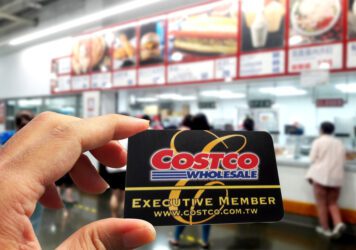
Costco.com has recently joined Internet retailing's $1 billion club, but it is not resting on its laurels.

The Seattle-based retail giant plans to replace the front-end platform of its web site around the first of the year.

The aim is to offer its relatively affluent customer base more options, easier navigation and increased flexibility. Customer reviews will be added and possibly gift registries, says Ginnie Roeglin, senior vice president for e-commerce and publishing.

Sales for the 2007 fiscal year reached $1.22 billion, up 39% from $880 million in the prior year.

While the company does not market its site beyond its Costco Club membership of 38 million, it does try to give those members reasons to keep coming back.

The average Costco Club member is 48 years old, and more affluent (annual household income above $78,000) and better educated (74% are college graduates) than the typical consumer, according to Roeglin. The web site is designed to appeal to that demographic.

Not only does Costco.com sell higher quality items than many department store and warehouse sites, it also promotes new and limited-time offers and features a buyer's pick selection in some departments. The site also highlights products not available in Costco stores. For instance, large merchandise such as furniture, patio sets, playground equipment and spas that might be too bulky for warehouses are sold on the web site.

Among the more than two dozen departments listed atop the site's home page are funerals, food and wine, musical instruments, and pets, in addition to more traditional department store offerings. Mousing over each category reveals its sub-categories, making navigation easier without cluttering up the home page.

Sucharita Mulpuru, principal retail analyst with Forrester Research, says Costco.com has an inventory of products that cannot be matched by other e-commerce sites. "Where else on the web," she says, "can you buy a casket, a set of tires, a trip to Cancun, and order prints from your digital camera, all in one stop? Not even Amazon offers travel on its site." Back to Top


The web's way more
The web is much more than just a sales channel. For multi-channel marketers, it can be a multi-tasker of the first order--if they know how to harness its full utility, as J.C. Penney does.

"Who would have thought that J.C. Penney, one of the oldest retailers, would adopt the key principle of breaking down traditional business boundaries and connecting channels, partners, suppliers and customers through the Internet?," observes Rob Garf, vice president and general manager of retail strategies at AMR Research Inc.

JCP.com is the company's fastest-growing business and the hub of a well-executed multi-channel strategy.

"As customers increasingly leverage the Internet to do research before shopping, they have an expectation they will be able to not only purchase merchandise online, but also research merchandise, price compare and review weekly promotions before ever setting foot into a J.C. Penney store. This requires a very sophisticated, complementary relationship among our channels and tight integration with our marketing efforts," says John Irvin, president of JCP.com.

This integration produces shopping functionality such as the Know Before You Go initiative, launched in time for the holidays, which provides online merchandise visibility at local stores, the ability to shop weekly print ads online and enhanced search capabilities.

"JCP.com is the foundation that connects each point of interaction with consistent inventory, product and customer information," says Garf, who notes the web site is accessible via tens of thousands of POS systems throughout the company's network of stores. "This strategy has propelled revenue for its online operations to more than $1 billion annually, making the brand one of the largest online retailers in the world."

The year's initiatives also demonstrate the retailer knows its way around Web 2.0. One example is JCPToday, a downloadable widget introduced this summer that gives customers a desktop connection to the company that supports rich media and targeted content delivery. A holiday microsite, JCPgifts.com, gives shoppers an integrated online experience that lets them search for gifts by price, person and category as well as view the retailer's Christmas commercials, create wish lists, and download wallpapers and ringtones. Back to Top


Hub of the brand
Federated Department Stores made a big bet on the Macy's brand. After buying up many regional department store chains, the Cincinnati-based company replaced their often-cherished names with Macy's and then changed its own name to Macy's Inc.

And it's invested heavily in Macys.com, seeking to make it a great place to shop and a driver of traffic to the 850 Macy's stores. "A big part of the web site design is to be the hub of the Macy's brand," says Kent Anderson, president of Macys.com, "to enable online and in-store shopping, to allow customers to take advantage of services, store events and products in a seamless way across Macy's."

Among the many site improvements is an enhanced product-comparison feature that's improved conversion by three times. Technology from Mercado Software Inc. allows customers to search by a wide range of attributes, such as the number of cups a coffeemaker makes.

Customers can more easily see the status of an order and view and pay bills online. They can e-mail gift cards good in stores and online, and personalize gift cards with photos they upload to the site. A 600,000-square-foot distribution center dedicated to efficiently fulfilling online and catalog sales opened this year in Portland, Tenn.

Macy's has added products to the site, including mattresses and furniture. When Martha Stewart unveiled a new collection this fall available exclusively at Macy's, the Macys.com site featured a video of Stewart introducing the collection. And a Macy's-exclusive product mentioned on the Martha Stewart site now can be easily purchased by clicking on a link to Macys.com.

"Macys.com is a very clean, well designed site that brings together an awful lot of products in a very well-organized fashion," says Steve Rowen, a partner at RSR Research. "It's far and away the easiest large format department store site to navigate."

The site also has many useful features, such as one that lets visitors sort bedding collections by color. "That's a tremendous timesaving tool," Rowen says. "It's an enjoyable site to shop." Back to Top


The niche expert
NetShops Inc. operates more than 200 web sites, each with a narrow specialty, such as Adirondack chairs, bocce ball sets or trailer hitches. Because a bocce enthusiast is likely to be quite different from someone seeking a trailer hitch, each site is designed individually, says Jason Goldberger, chief merchandising officer at the company based in Omaha, Neb.

"We take each web site, define who the customer is and how they want to make their purchase, and design the web site around that," Goldberger says.

At the company's original site, Hammocks.com (motto: Accomplish nothing), the focus is on photos showing what the hammocks look like and how many people each can hold. But at Binoculars.com, bird watchers or astronomy buffs can find the technical specifications they may want.

Customers trying to decide between two items can see them side by side by checking boxes next to each item and hitting a Compare button. Product reviews are displayed--pans as well as raves.

Goldberger believes wide selection is the key to meeting customers' needs and the company has added thousands of SKUs across its sites this year, he says. Barstools.com alone has increased its offerings by 20%.

The NetShops.com home page makes it easy to drill down to product one wants from all the company's sites, says Chris Vicente, senior manager in the retail practice at consulting firm BearingPoint. And he likes the link for businesses seeking volume discounts.

He especially likes a feature called Shop Together, introduced in October, that lets two customers jointly explore the site from separate computers. "My sister lives in Los Angeles and I could envisage sending her a Shop Together link, looking at items together and asking her, 'Does this make sense for our cousin?'" Vicente says.

"The concept of social networking and e-commerce is exciting to people, but it's too soon to tell how successful it's been," Goldberger says. Besides allowing two shoppers to compare notes, he says customer service representatives also can shop along with a customer who calls with questions. Back to Top


Easy hunting

For Overstock.com shoppers, finding the right item at the best price is the primary goal. And Overstock makes bargain hunting quick and easy by offering multiple options for browsing and search--such as Clearance Bin and Steals of the Week--on the upper right corner of the home page. It also posts shopping recommendations for featured products.

Overstock.com has used web analytics to find the best approach to attract shoppers and boost sales. It modified page design and produced an increase in products added to shopping carts after using analytics data to view how shoppers clicked through product pages.

Overstock.com realized that product pages forced shoppers to scroll down to the bottom half of the pages to get the information they needed to make a purchase decision--a design that caused many shoppers to move on without carting products. By moving that information above the fold of the page, Overstock experienced a 5% lift in the number of products added to shopping carts.

"Overstock is terrific at testing new ways of targeting customers," says Patti Freeman Evans, senior analyst-retail at JupiterResearch. "They endeavor to be relevant based on a number of inputs, for example, both e-mail and home page visuals are prioritized in some test groups to be driven from past browsing behavior of that customer."

But Overstock doesn't rely on page design alone to attract shoppers. It is moving into mobile commerce with a free e-mail reminder service known as O-minders and a program known as Mobile O that lets customers shop the whole site from a mobile phone. It also offers a rewards program.

Overstock also has introduced a new community feature called Omuse, which lets readers help populate various how-to guides. At the same time, it feeds back to merchandising by running contextual ads in the form of product listings from the site alongside the contributed content. For example, links to products such as golf books and golf gear are listed next to a guide to buying a golf bag. Back to Top


Shop for fun
The typical customer of Shop.com is a relatively affluent mother between the ages of 30 and 55. When the site asked its customers what they wanted, they said convenience--and something less expected.

"Our audience was telling us they wanted some place that was fun and vibrant," says Mondy Beller, senior vice president of marketing for the Monterey, Calif.-based retailer. "We took that information and redesigned our web site."

Shop.com gave personality to the object of its redesign efforts by visualizing a fictional woman shopper named Megan. Everything was done with Megan in mind.

The site added more color, according to Beller, brightening the look in a way that research showed would appeal to Megan--and other women.

"The graphics are nice," says Gene Alvarez, a vice president at Gartner, Inc., a technology research and consulting firm. He adds that the redesign also makes shopping easy.

Shop.com added games to keep loyal customers coming back, and to win new ones. In a daily "cart-me-away" game, contestants read a story, then are given a list of related items and asked to select products from that list whose prices add up to a given dollar amount. Prizes are awarded each day--$20 or $50 coupons. At the conclusion of a contest's run, typically four weeks, an overall winner gets $10,000 in credits to spend at Shop.com. Beller says more than 50,000 shoppers compete, and the numbers are escalating.

In a seasonal game, contestants submit Scrooge stories. The winner receives a pair of diamond earrings.

Shop.com also invites visitors to make online donations to the Make-a-Wish Foundation.

The web site has a begun a relationship with FaceBook, enabling shoppers to share with friends what they bought on Shop.com as well as activities, such as their donations to Make-a-Wish.

Customers can sign up for two weekly e-mail newsletters, one apprising them of shopping trends and the other promoting hot deals. A new blog informs shoppers of cool products that are available.

The new features, says Beller, "make the site really fun and more exciting and give the customer a reason to come back every day." Back to Top


Convergence ahead
With its roots in televised home shopping shows, ShopNBC.com was a natural to lead in the use of video online. More than 30% of the items on the site feature 30-second to 1-minute video demonstrations, and customers who watch them convert at twice the rate as other visitors to the site, says Geoff Smith, vice president of Internet.

"That's a really innovative feature," says Chris Vicente, senior retail practice manager at consulting firm BearingPoint. "When you go to a web site, even if there are multiple views of an item, you actually want to see the product in action."

The ShopNBC.com video player features a slider that lets users control the volume, "a good thing if you're a late-night shopping addict," Vicente adds.

But adding video to ShopNBC.com is just part of the strategy for taking advantage of the rapid convergence of television, video and the web at ShopNBC.com's parent company, ValueVision Media Inc. of Eden Prairie, Minn. (ValueVision is 27% owned by NBC Universal.)

The company this spring launched ShopNBC.tv, a site that plays the show airing on the ShopNBC TV network and lets consumers buy the product being presented. An "On Air" link at the top of ShopNBC.com provides easy navigation to the dot-tv site, which has a prominent link back to the dot-com site.

A more sophisticated version of the dot-tv site was scheduled to launch last month. It would allow visitors to search for shows by product category, brand, price point, host and other parameters.

Consumers interested in jewelry can watch only jewelry shows, and those enamored of host Kerry McNally can watch him all day long, Smith says. Consumers can see all the products that will be presented during a show and skip ahead to the ones that interest them.

"Traditional TV is linear--you can only buy what we're showing now on the air," Smith says. "On the web, we can let customers choose what they want to do. We're setting the stage for the next generation of home shopping via the Internet."

Back to Top
Only the beginning

Walmart.com is out to be "the most visited, most valued online retail site," CEO Raul Vazquez says. After being initially slow out of the gate, Brisbane, Calif.-based Walmart.com this year rolled out initiatives that are turbo-charging its progress.

The Site to Store free shipping option implemented nationally in July delivers merchandise ordered online to a shopper's local Wal-Mart store for pick-up. That's already saved Walmart.com customers $25 million in shipping fees, Vazquez says. Wal-Mart stores benefit, too: 60% of shoppers picking up items ordered online make additional purchases when in the store.

Wal-Mart's sheer mass, when applied to technology already in play, generates numbers that make it impressive all over again. Walmart.com didn't add ratings and reviews until July, but the feature already has generated 80,000 reviews by consumers, who now send about 1,000 reviews per day. Reviews lift conversion on highly-rated products and give customers another reason to visit. A one-star review depresses sales, but that's fine with Vazquez, who says negative reviews that prevent a sale also prevent a bad experience with the Wal-Mart brand and reduce product returns.

Though still limited to a small number of products, new Find in Store functionality is getting over a million uses weekly. It lets online customers see inventory status at their local store to buy there or online. Products are identified as in stock, out of stock or limited in stock, with the last based on a calculation of the number in inventory and the rate of sale. That combination is helping to manage customers' expectations effectively, Vazquez says, adding that research indicated simply showing the number of items in inventory wasn't as useful to shoppers.

Rob Garf, vice president and general manager of retail strategies at AMR Research Inc., says programs like Site to Store show "Wal-Mart's online operation is now hitting on all cylinders. Wal-Mart's ability to execute within each store to support cross-channel capabilities will be the defining factor of its success, with the initial results impressive."

"Watch out," Garf adds. "This is only the beginning." Back to Top

End of Content

Copyright © 2009 This content is the property of Vertical Web Media. Privacy Policy
Articles by Age, Title, Author. Conference, CD, Guides, Popular Searches